Showing posts with label capitalism. Show all posts

Sunday, February 4, 2018

Fair Share


I had a dream the other night my sister, Rosie, and I slept in the same bed. She started hogging all the covers and I yanked them back from her and said, “No. You can't take all the covers.” It's not a dream based on reality because Rosie cares a lot about sharing, but nonetheless, it got me thinking about greed, especially as it relates to the world's resources. A group of people are hogging almost all the resources leaving the rest of us shivering in the cold.

Peter Joseph said, “The value system disorder of rewarding, in effect, generally the most ruthless and selfish in our society, both by financial means and then by public adoration and respect, is one of the most pervasive and insidious consequences of the incentive system inherent to the capitalist model.”
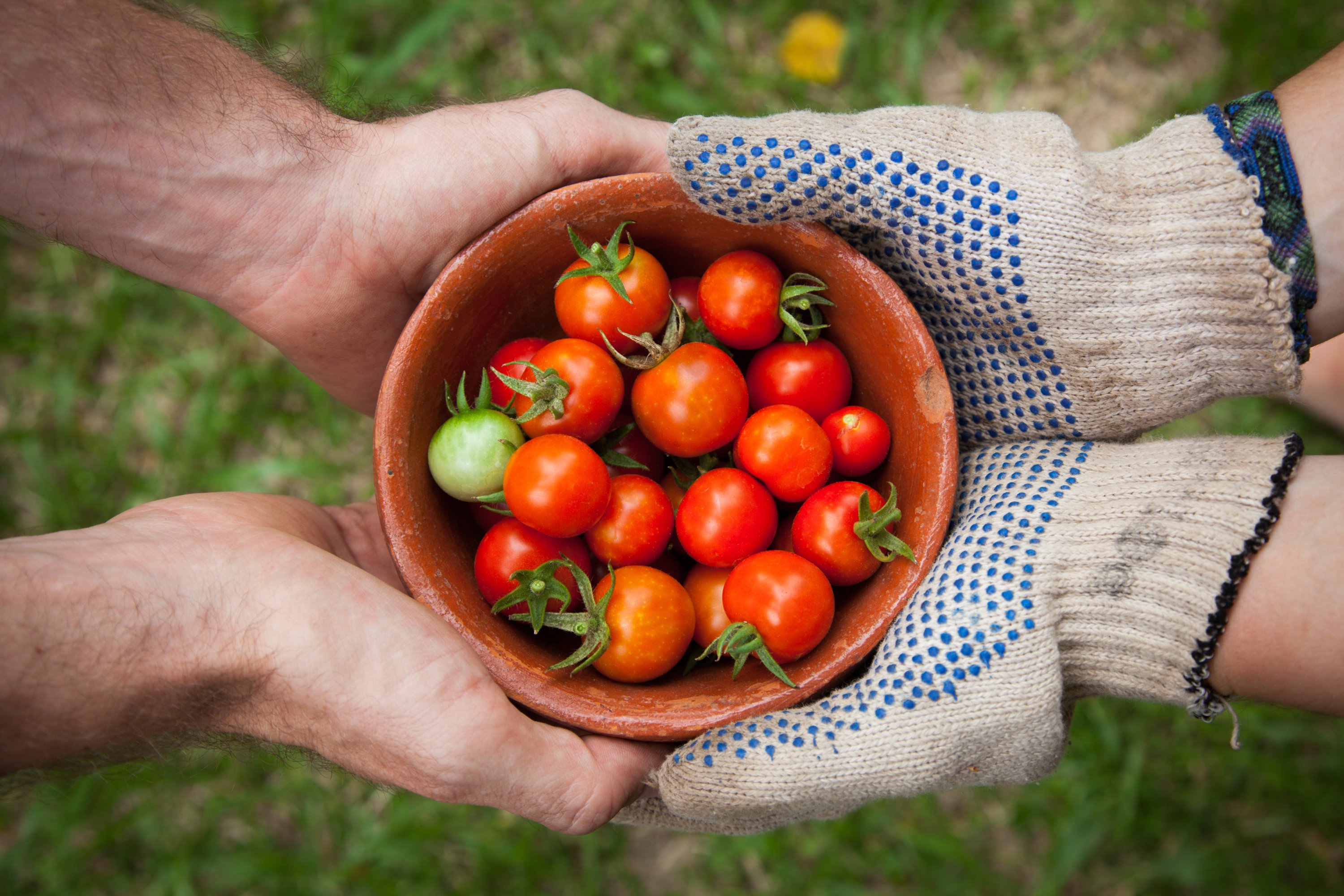
 I'm interested in fairness and sharing. Photo by Elaine Casap on Unsplash.

I'm with you Peter. By and large, we as a society seem to be OK with greed as long as it comes from a place of power. No one bats an eye when we hear about corrupt politicians or businessmen engaging in shady backroom deals. In fact, I think we expect it. We've become so used to greed and selfishness it seems normal. In a way, it is normal. We all have the same tendencies within us. In yogic philosophy, these tendencies are called vrttis.

My spiritual teacher says, “The correct way to get rid of depraving tendencies is not to repeat to oneself that I shall avoid this tendency or that. Suppression is not the proper way to weaken these tendencies. Do not suppress, but channelize. Humans are psychic beings. Reconvert the psychic into the spiritual. Let elevating tendencies be converted into a spiritual wave.”

My point in using that quote is to say yes, we all have the capacity for cruelness, for greed, for selfishness, but that doesn't mean we say, “Oh well. It's natural. Gotta let it do it's thing.” No. As human beings we are constantly evolving and that means using rationality, it means channelizing our natural propensities toward something else. If I want to strangle a cat, instead of acting on that impulse, it's better for me to rip up a phone book, or scream into a pillow. The same is true, and can be true, for greed.

I realize not everyone is interested in converting their natural impulses, that's fine, but it means we as a society have to impose laws and sanctions. We already have consequences for things like murder and theft, why don't we have consequences for hoarding wealth? Why do we instead encourage it? I already know the answer to that question, but I'd like to go back to my dream.

If Rosie and I were still children living at home, what would happen if we started bickering about the bed covers? Our parents would come in and either make us share or give us separate bed covers. They would come up with a solution – they wouldn't say, “Oh well. It's human nature to be greedy Rebekah, get over it. You'll just have to shiver.”

What I'm proposing here is that we all start acting like parents, coming up with solutions that work for all of us. I'm proposing that we act like adults and say, “No” to people who want to hoard all the covers, so to speak, and instead encourage a more fair share.

I dream of a world where we work together to curb the natural impulse toward greed. A world where we say “No” to hoarding wealth. A world where we understand we can channelize our natural tendencies into something else. A world where we give people their fair share.

Another world is not only possible, it's probable.

Sunday, January 28, 2018

A Tree is Not a Forest


The other day my Lyft driver said the word “thug” with so much derision it sounded like a slur. Frankly, I think that's how he meant it. He also praised a town in California that restricts the number of residents by not building any new dwellings, and the town would rather pay penalties than allow section eight housing. What astounds me is this guy presumably thinks society would be better off if all towns quarantined the poor and people of color as if they were deadly viruses.

I understand this already happens to a large degree – many places stratify according to socioeconomics and/or ethnicity – but it's shortsighted and unnatural. I read a fascinating article about trees the other day. Did you know a tree can be only as strong as the forest that surrounds it?

What applies to trees applies to people. Photo by veeterzy on Unsplash.
Neighboring trees help each other through their root systems either directly, by intertwining their roots, or indirectly, by growing fungal networks around the roots that serve as a sort of extended nervous system. Why do they do this? According to German forester Peter Wohlleben, it's because like in human communities, there are advantages to working together. He said:
"A tree is not a forest. On its own, a tree cannot establish a consistent local climate. It is at the mercy of wind and weather. But together, many trees create an ecosystem that moderates extremes of heat and cold, stores a great deal of water, and generates a great deal of humidity. And in this protected environment, trees can live to be very old. To get to this point, the community must remain intact no matter what. If every tree were looking out only for itself, then quite a few of them would never reach old age. Regular fatalities would result in many large gaps in the tree canopy, which would make it easier for storms to get inside the forest and uproot more trees. The heat of summer would reach the forest floor and dry it out. Every tree would suffer.  
"Every tree, therefore, is valuable to the community and worth keeping around for as long as possible. And that is why even sick individuals are supported and nourished until they recover. Next time, perhaps it will be the other way round, and the supporting tree might be the one in need of assistance." 
It seems so obvious, noting at one time or another we may be in need of assistance, yet somehow it's not. We praise rugged individualism in the U.S. as if that's a good thing. We pretend a person can be separated from others and thrive. Human beings are social creatures, we need other people to survive, yet we operate as if the problems of those down the street have nothing to do with us, as if there is an “over there” and an “over here.” We are already living in a community, we are all already sharing the same resources, and in order for us all to thrive, it's important we remember that. And that's the sort of world I want to live in.

I dream of a world where we remember we are all in this together. A world where we realize isolating ourselves from problems doesn't make them go away. A world where we remember we can only be as strong as the community around us. A world where we realize a tree is not a forest and a human is not a community.

Another world is not only possible, it's probable.

Sunday, January 21, 2018

The Ugly Truth


Right now the funds in my bank account are low – I am one of those people who lives paycheck to paycheck. I think it's fair to say I'm a slave to my paycheck and I'm not the only one. If I lost my job tomorrow, I'd be in big trouble. I notice there's a part of me, a teeny part, that feels ashamed of that. Like if I'm poor it's my fault because I'm not budgeting well or proactive enough. There might be some truth to that, but also I take a look around me and notice I'm not the only one experiencing this. And if I'm not the only one experiencing this, doesn't that point to something systemic? Yes! It does!

A friend of mine works as a finance professor in a major metropolitan city and he told me something we don't like to admit about capitalism is it requires an economic underclass. In order for capitalism to function, someone has to get the short end of the stick. I'll remind you this is not coming from a pinko-commie, this is coming from someone who teaches finance at a well-respected university.

I'm a slave to the dollar and that sucks. Photo by Pepi Stojanovski on Unsplash.

The ugly truth about capitalism is it requires exploitation. I read a fascinating article the other day about the myth of the ethical shopper. The author, Michael Hobbes, wrote that these days, it's not the U.S. that's a major culprit of sweatshops, it's other countries. Indian children subsist off of pennies a day making clothing not for Americans, but for Indians or Chinese. Hobbes also said the production cycle is so divorced from people at the top, no one really knows where their clothes are made. Contracts subcontract out over and over again until the whole thing becomes a tangled mess. And for people in those sweatshops who try to unionize, the company says, “See you later,” and goes to another country where regulation is more lax and they can pay people less. As long as we care about getting something for the lowest price possible, we'll continue to have this situation.

It's not only a developing world problem, by the way, it's also in the good old U.S. of A. Women are still paid less than men, and women of color really get shafted. And let's not forget the exploitation rampant in sectors like food. The working conditions for people who pick produce is appalling. I bring this up because we pretend capitalism can work as a system, that it only needs a few tweaks. We pretend that anyone can become a millionaire if they only remove their mental blocks to abundance. That may be true, but what about everyone else?

Did you know approximately eight people own half the world's wealth, according to Oxfam? The Economist takes issue with the math, but even they conclude a small number of people own half the world's wealth. That means the rest of us are fighting for a small piece of pie. I don't know about you, but I'm not OK with this. We have a minimum wage, why don't we have a maximum wage? Why don't we have rules about how much wealth one person can own? If that sounds too communist, OK, then how about enhancing our social safety nets? Right now, the U.S. government is cutting funding for food stamps, Medicare, and other social services. If I lose my job tomorrow, I'm more likely to lean on friends and family than the government. Isn't the government supposed to be of the people, by the people, and for the people? I'm sure not seeing a lot of that.

I realize this post is not an optimistic one, but in this instance, I think it's important to acknowledge the ugly truth. Until we do, we'll never see the changes we'd like in our society, and I long for those changes.

I dream of a world where everyone everywhere has their basic needs met. A world where we aren't slaves to our paychecks. A world where we can lose our jobs and still be taken care of. A world where we start treating all living beings as worthy and deserving of respect.

Another world is not only possible, it's probable.

Sunday, May 7, 2017

The Human Family Includes Everyone


The other week I posted a news story on facebook with commentary that I have compassion for robbers and the robbed, and was met with so much vitriol it astounded me. People I didn't know called me a moron (and worse), told me to get off of facebook, etc. What I heard over and over again was, “I'm poor and I've never robbed anyone.” That's great! I'm glad there are poor people that don't rob others. Keep not robbing.

What strikes me is how me-centered that viewpoint is. There is an inherent expectation that we all act a certain way, but guess what? We don't. And placing so much onus on the individual doesn't work. I'm reminded here of the recently passed healthcare bill in the House of Representatives. The terms of the bill are ludicrous in my opinion. “Have you ever been sick? Are you a woman? So sorry, no healthcare insurance for you or you'll have to pay staggering premiums. Good luck with that.”

We are all part of the human family.

Indian philosopher and economist P.R. Sarkar said, “Rich people do not want to consider the needs of the poor, because if they do, they will have to make some sacrifices. Where will their luxuries and comforts come from if hunger does not burn the bellies of the poor?” Our capitalistic society encourages this mindset, encourages us to look out only for ourselves, and try to scramble to the top of the heap by declaring, “I worked hard for this so I earned it!” Yes, but that means the suffering of others continues. It's easy to dismiss, to say the people in that position just didn't work hard enough, or try hard enough, or act the right way, or whatever. There are a thousand excuses we could give.

Sarkar said, “[T]o admit that these sufferings are the result of social injustices implies that everyone is responsible.” And that's the thing, we are all responsible. We are all responsible for each other. The human family includes everyone. I've quoted this African proverb before, but it's pertinent so I'm quoting it again: “If you want to go fast, go alone. If you want to go far, go together.”

I want to go far. I long to go far. How do we do that? What can little ole me do from her apartment here in California? It sounds cheesy as all get out, but one of the answers is love. I'll close with another quote from Sarkar:
Like any other problem, great or small, there is only one way to solve economic problems, and that is through genuine love for humanity. This love will give people guidance; it will show them what to do and what not to do. It is not necessary to study great numbers of books or to rely upon those who speculate with the future of the silent masses. The only essential requirement is to look upon humanity with genuine sympathy.
I may not be a politician, I may not be an economist or a philanthropist or a CEO, but I sure as heck can love humanity. I can have compassion and sympathy and empathy for those around me. I can keep loving people even through their missteps. I can keep spreading love and embodying love and talking about love even when people call me foolish. And I will.

I dream of a world where a genuine love for humanity is awakened in all of us. A world where we all look out for each other. A world where we understand our progress is linked to those around us. A world where we understand the human family includes everyone and we act accordingly.

Another world is not only possible, it's probable.

Sunday, February 14, 2016

We Can Do Better than This


A part of me doesn't want to write about this because it makes me uncomfortable, but I was affected so deeply I know that I must.

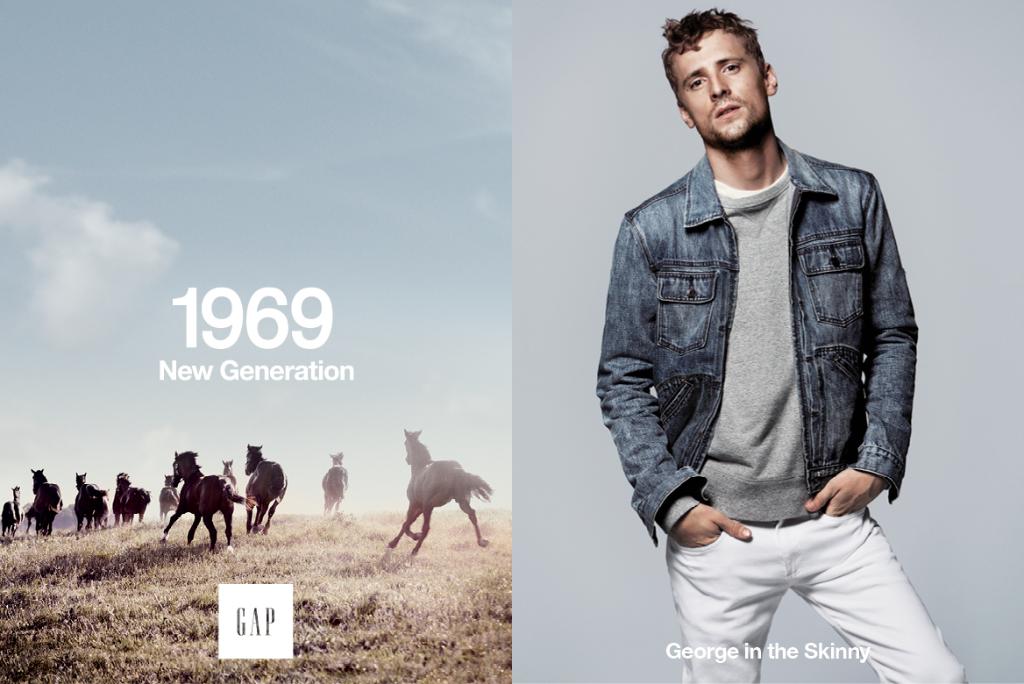
On Thursday, I went into San Francisco and while there, walked through a BART station corridor covered with ads for Gap. The walls and floor showed image after image of beautiful people wearing denim with the slogan: “1969: new generation.” All throughout the corridor, homeless people were passed out or holding up cardboard signs asking for money. One man sat on the floor, on top of the Gap ad, with his back against the wall, head held down with matted hair, literally covered in his own feces. That was the encounter that broke me.

This picture encapsulates this post for me.

The juxtaposition of a man, wearing jeans no less, covered in his own crap while sitting on an ad touting a time period of turmoil and change was too much for me, the irony too great. I walked away feeling helpless and downtrodden because what am I, little old me, supposed to do about this? I am not a policymaker, I am not a housing developer, I'm a journalist, so I'm doing what I do best: writing about it.

When people talk about the American dream, about there being no limits to the heights they can reach and the money they can make, they forget there is a price. P.R. Sarkar says, “[W]hen capitalists declare, 'We have amassed wealth by our talent and labor. If others have the capacity and diligence, let them also do the same; nobody prevents them,' they do not care to realize that the volume of commodities on the Earth is limited, whereas the requirement is common to all. Excessive individual affluence, in most cases, deprives others of the minimum requirements of life.”

We are all in this together so that means, no, one person should not be allowed to accumulate massive amounts of wealth unchecked. To do so, the uber wealthy “reduce others to skin and bones gnawed by hunger and force them to die of starvation; to dazzle people with the glamour of their garments, they compel others to wear rags,” Sarkar writes. That's exactly what I witnessed on Thursday and I'm not OK with it. We are one big family, literally, and it's time we started acting like it.

I'm writing to say the world doesn't have to be this way, we don't have to say “yes” to this. Alternatives exist such as Prout, the Progressive Utilization Theory. It's a paradigm of development that places economic power in the hands of people and communities, nurtures living beings, promotes equity, ends exploitation, and maintains sustainable balance with the biosphere.

If Prout doesn't float your boat, that's OK, but something needs to change. We can't keep going on like we have, that much is clear. I don't know how this new economy will come about, or what action needs to occur. All I know is in the meantime, I'm talking about it with you. I'm telling as many people as I can because I want to live in a better world and I really believe we can make it so.

I dream of a world where homelessness is eradicated. A world where there is a cap on wealth. A world where everyone's basic needs are met. A world where we take care of each other because we recognize we are one, big, universal family. A world where we do better than this.

Another world is not only possible, it's probable.