Sunday, February 4, 2018

Fair Share


I had a dream the other night my sister, Rosie, and I slept in the same bed. She started hogging all the covers and I yanked them back from her and said, “No. You can't take all the covers.” It's not a dream based on reality because Rosie cares a lot about sharing, but nonetheless, it got me thinking about greed, especially as it relates to the world's resources. A group of people are hogging almost all the resources leaving the rest of us shivering in the cold.

Peter Joseph said, “The value system disorder of rewarding, in effect, generally the most ruthless and selfish in our society, both by financial means and then by public adoration and respect, is one of the most pervasive and insidious consequences of the incentive system inherent to the capitalist model.”
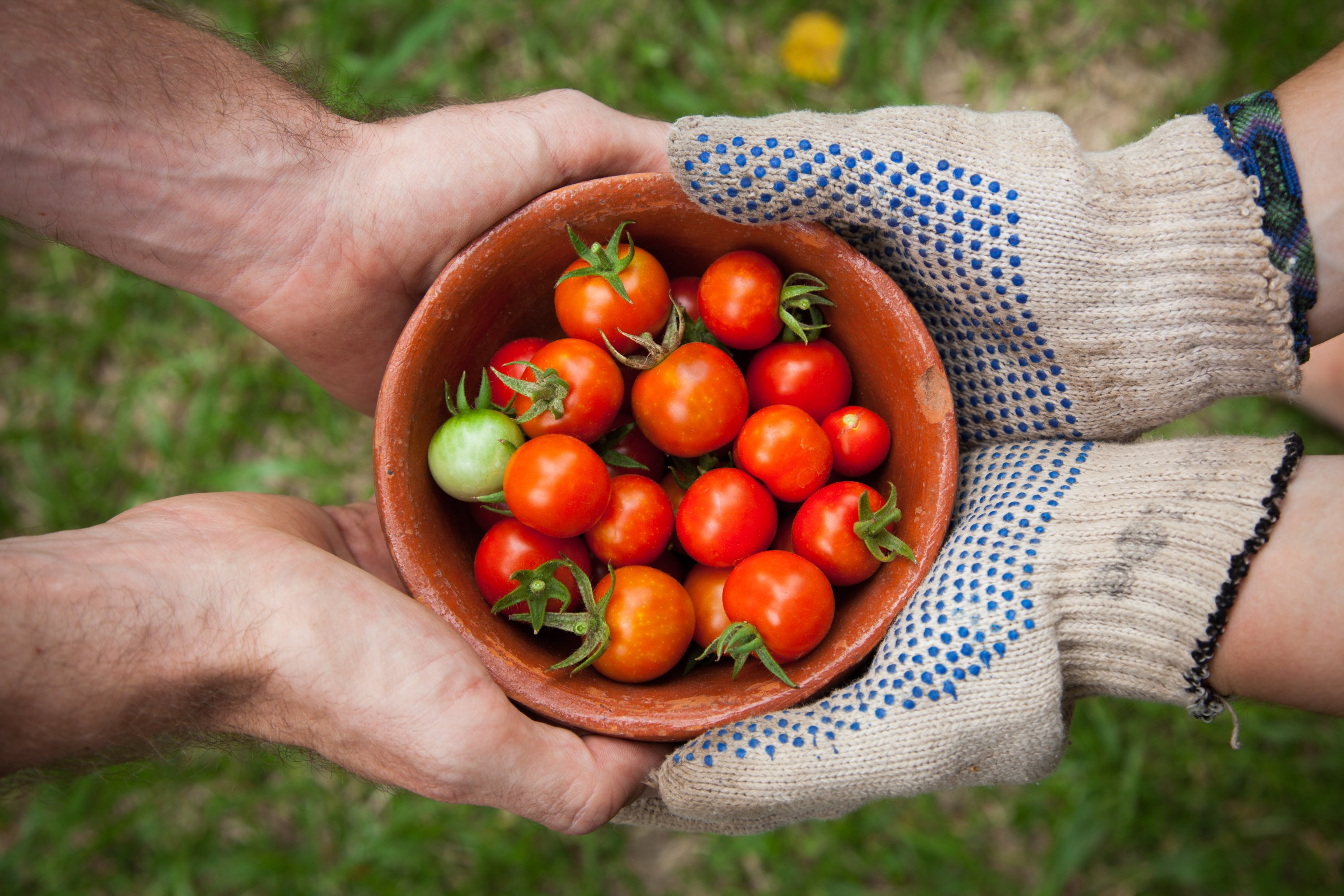
 I'm interested in fairness and sharing. Photo by Elaine Casap on Unsplash.

I'm with you Peter. By and large, we as a society seem to be OK with greed as long as it comes from a place of power. No one bats an eye when we hear about corrupt politicians or businessmen engaging in shady backroom deals. In fact, I think we expect it. We've become so used to greed and selfishness it seems normal. In a way, it is normal. We all have the same tendencies within us. In yogic philosophy, these tendencies are called vrttis.

My spiritual teacher says, “The correct way to get rid of depraving tendencies is not to repeat to oneself that I shall avoid this tendency or that. Suppression is not the proper way to weaken these tendencies. Do not suppress, but channelize. Humans are psychic beings. Reconvert the psychic into the spiritual. Let elevating tendencies be converted into a spiritual wave.”

My point in using that quote is to say yes, we all have the capacity for cruelness, for greed, for selfishness, but that doesn't mean we say, “Oh well. It's natural. Gotta let it do it's thing.” No. As human beings we are constantly evolving and that means using rationality, it means channelizing our natural propensities toward something else. If I want to strangle a cat, instead of acting on that impulse, it's better for me to rip up a phone book, or scream into a pillow. The same is true, and can be true, for greed.

I realize not everyone is interested in converting their natural impulses, that's fine, but it means we as a society have to impose laws and sanctions. We already have consequences for things like murder and theft, why don't we have consequences for hoarding wealth? Why do we instead encourage it? I already know the answer to that question, but I'd like to go back to my dream.

If Rosie and I were still children living at home, what would happen if we started bickering about the bed covers? Our parents would come in and either make us share or give us separate bed covers. They would come up with a solution – they wouldn't say, “Oh well. It's human nature to be greedy Rebekah, get over it. You'll just have to shiver.”

What I'm proposing here is that we all start acting like parents, coming up with solutions that work for all of us. I'm proposing that we act like adults and say, “No” to people who want to hoard all the covers, so to speak, and instead encourage a more fair share.

I dream of a world where we work together to curb the natural impulse toward greed. A world where we say “No” to hoarding wealth. A world where we understand we can channelize our natural tendencies into something else. A world where we give people their fair share.

Another world is not only possible, it's probable.

Sunday, January 28, 2018

A Tree is Not a Forest


The other day my Lyft driver said the word “thug” with so much derision it sounded like a slur. Frankly, I think that's how he meant it. He also praised a town in California that restricts the number of residents by not building any new dwellings, and the town would rather pay penalties than allow section eight housing. What astounds me is this guy presumably thinks society would be better off if all towns quarantined the poor and people of color as if they were deadly viruses.

I understand this already happens to a large degree – many places stratify according to socioeconomics and/or ethnicity – but it's shortsighted and unnatural. I read a fascinating article about trees the other day. Did you know a tree can be only as strong as the forest that surrounds it?

What applies to trees applies to people. Photo by veeterzy on Unsplash.
Neighboring trees help each other through their root systems either directly, by intertwining their roots, or indirectly, by growing fungal networks around the roots that serve as a sort of extended nervous system. Why do they do this? According to German forester Peter Wohlleben, it's because like in human communities, there are advantages to working together. He said:
"A tree is not a forest. On its own, a tree cannot establish a consistent local climate. It is at the mercy of wind and weather. But together, many trees create an ecosystem that moderates extremes of heat and cold, stores a great deal of water, and generates a great deal of humidity. And in this protected environment, trees can live to be very old. To get to this point, the community must remain intact no matter what. If every tree were looking out only for itself, then quite a few of them would never reach old age. Regular fatalities would result in many large gaps in the tree canopy, which would make it easier for storms to get inside the forest and uproot more trees. The heat of summer would reach the forest floor and dry it out. Every tree would suffer.  
"Every tree, therefore, is valuable to the community and worth keeping around for as long as possible. And that is why even sick individuals are supported and nourished until they recover. Next time, perhaps it will be the other way round, and the supporting tree might be the one in need of assistance." 
It seems so obvious, noting at one time or another we may be in need of assistance, yet somehow it's not. We praise rugged individualism in the U.S. as if that's a good thing. We pretend a person can be separated from others and thrive. Human beings are social creatures, we need other people to survive, yet we operate as if the problems of those down the street have nothing to do with us, as if there is an “over there” and an “over here.” We are already living in a community, we are all already sharing the same resources, and in order for us all to thrive, it's important we remember that. And that's the sort of world I want to live in.

I dream of a world where we remember we are all in this together. A world where we realize isolating ourselves from problems doesn't make them go away. A world where we remember we can only be as strong as the community around us. A world where we realize a tree is not a forest and a human is not a community.

Another world is not only possible, it's probable.

Sunday, January 21, 2018

The Ugly Truth


Right now the funds in my bank account are low – I am one of those people who lives paycheck to paycheck. I think it's fair to say I'm a slave to my paycheck and I'm not the only one. If I lost my job tomorrow, I'd be in big trouble. I notice there's a part of me, a teeny part, that feels ashamed of that. Like if I'm poor it's my fault because I'm not budgeting well or proactive enough. There might be some truth to that, but also I take a look around me and notice I'm not the only one experiencing this. And if I'm not the only one experiencing this, doesn't that point to something systemic? Yes! It does!

A friend of mine works as a finance professor in a major metropolitan city and he told me something we don't like to admit about capitalism is it requires an economic underclass. In order for capitalism to function, someone has to get the short end of the stick. I'll remind you this is not coming from a pinko-commie, this is coming from someone who teaches finance at a well-respected university.

I'm a slave to the dollar and that sucks. Photo by Pepi Stojanovski on Unsplash.

The ugly truth about capitalism is it requires exploitation. I read a fascinating article the other day about the myth of the ethical shopper. The author, Michael Hobbes, wrote that these days, it's not the U.S. that's a major culprit of sweatshops, it's other countries. Indian children subsist off of pennies a day making clothing not for Americans, but for Indians or Chinese. Hobbes also said the production cycle is so divorced from people at the top, no one really knows where their clothes are made. Contracts subcontract out over and over again until the whole thing becomes a tangled mess. And for people in those sweatshops who try to unionize, the company says, “See you later,” and goes to another country where regulation is more lax and they can pay people less. As long as we care about getting something for the lowest price possible, we'll continue to have this situation.

It's not only a developing world problem, by the way, it's also in the good old U.S. of A. Women are still paid less than men, and women of color really get shafted. And let's not forget the exploitation rampant in sectors like food. The working conditions for people who pick produce is appalling. I bring this up because we pretend capitalism can work as a system, that it only needs a few tweaks. We pretend that anyone can become a millionaire if they only remove their mental blocks to abundance. That may be true, but what about everyone else?

Did you know approximately eight people own half the world's wealth, according to Oxfam? The Economist takes issue with the math, but even they conclude a small number of people own half the world's wealth. That means the rest of us are fighting for a small piece of pie. I don't know about you, but I'm not OK with this. We have a minimum wage, why don't we have a maximum wage? Why don't we have rules about how much wealth one person can own? If that sounds too communist, OK, then how about enhancing our social safety nets? Right now, the U.S. government is cutting funding for food stamps, Medicare, and other social services. If I lose my job tomorrow, I'm more likely to lean on friends and family than the government. Isn't the government supposed to be of the people, by the people, and for the people? I'm sure not seeing a lot of that.

I realize this post is not an optimistic one, but in this instance, I think it's important to acknowledge the ugly truth. Until we do, we'll never see the changes we'd like in our society, and I long for those changes.

I dream of a world where everyone everywhere has their basic needs met. A world where we aren't slaves to our paychecks. A world where we can lose our jobs and still be taken care of. A world where we start treating all living beings as worthy and deserving of respect.

Another world is not only possible, it's probable.

Sunday, January 14, 2018

What is a Leader?


As I contemplate President Trump's recent comments about “shithole countries” and the upcoming birthday of Martin Luther King Jr., I can't help but wonder what it means to be a leader because one I think of as a leader, and the other I do not. In the past, I would have told you a leader is a person in charge, but as I've gotten older, I'm realizing how false that is. A person may be in charge due to privilege or nepotism or a host of other reasons, and not be what I call a leader.

The answer to the question, what is a leader, also changes depending on the circumstances. A leader could be someone with the most physical prowess or keen intellect. These days? It seems the majority of our supposed leaders are those with money or privilege. Furthermore, those in power seem more interested in exploitation and personal gain than the welfare of society as a whole.

This image seemed the most appropriate. Photo by Annie Spratt on Unsplash.

According to my spiritual teacher, this is the cycle of social evolution, where one particular class enjoys domination and superiority over another. By class, he means the laboring class, the warrior class, the intellectual class, and the merchant class. And each class rises and falls over time in a process that cannot be halted.
“The function of a [leader] shall, therefore, be to see that the dominating or the ruling classes do not have any scope for exploitation,” he said. “The moment one class turn into exploiters, the life of the majority becomes miserable; a few enjoy at the cost of many whose lot is only to suffer. More than that, in such a state of society both the few and the many get degenerated. The few (exploiters) degenerate themselves due to [an] excess of physical enjoyments, and the many (exploited) cannot elevate themselves, because all their energy is taken up in mundane problems .... Hence, for the physical, mental, and spiritual welfare of the administrator and the administered of the society as a whole, it is essential that no one be given any scope to exploit the rest of the society.”

Leaders then are active participants, they are like watchdogs, keeping an eye on signs of exploitation and then doing something about it. It seems to me, the primary quality of a leader is someone who is concerned with the well-being of humanity as a whole. A leader is not someone who cares only about their selfish pleasures. I won't speak for everyone, but I'll say for myself, I have an expectation a leader will swoop in out of nowhere and save us all. And furthermore, that a leader possesses skills and qualities that I do not. Like they're magical beings while I'm a mere human. Is that true though?

Vince Lombardi said, “Leader's aren't born, they are made.” That means we all possess the potential to be leaders. We all have the power to change something, to do something. We may not all trigger systemic change like Rosa Parks, but maybe. We'll never know if we don't try.

I dream of a world where we recognize we all have the potential to become leaders. A world where we understand leaders are not necessarily those in power and could be anyone, including us. A world where we each do our part to shepherd humanity toward a brighter tomorrow.

Another world is not only possible, it's probable.

Sunday, January 7, 2018

Fate Belongs to Us


I had a moment on New Year's Eve where I thought about going to bed before midnight. It would have been easy – I was in my room, lying down, waiting for the minutes to tick closer to 12. For the first time in my life, I realized a year is a collection of days and in some ways the start date is meaningless and arbitrary. Particularly because the Jewish New Year, which takes place in September or October, seems more in alignment with marking the phases of my life.

I think the other reason the start of the new year didn't excite is me because I've blown past all the mile markers I set for myself, and others set for me. A psychic told me by age 30 I'd have two elementary-aged children. Another told me in 2017 I'd meet my romantic partner. Two years ago I thought I'd be engaged this past winter. Those dates came and went without any of the predictions coming true. I bring that up because this is the first year I have zero expectations for the year. This is the first time the year ahead of me is a big question mark.

We make our own fate. Photo by Cristian Escobar on Unsplash.

All around me people are making their new year's resolutions or intentions or goalsetting while I'm not. A part of me feels anxious about that, like I should be doing the same thing because otherwise the year will be terrible and I'll be miserable, but I also realize the year is a collection of days and can start over at any time. Instead of freaking out that I haven't planned my whole life, I'm recognizing I can make plans when I'm ready. I know goals are important because they give us direction, but right now I'm building my trust muscle, trusting that when it's time for me to make a goal, I will. It could be a random day in April and that would be fine.

This year I'm understanding more deeply the future is not laid out before me like a bread crumb trail. The future is a culmination of past actions, some that are out of my awareness.

My spiritual teacher said, “The stars do not control you; your original actions control you. And where the original action is not known to you, but the result is known to you, the result is experienced by you, you say it is fate.”

There's a freedom in realizing my past actions dictate my future because it means anything is possible. It means I could head in any direction and anything could happen to me this year. Life is a precious collection of moments that are largely unplanned. I don't want to miss out on the treasures because I'm too busy following a schedule I set for myself. This year I'm really and truly open to whatever is and that feels like a good thing.

I dream of a world where we take the pressure off ourselves to plan our whole lives. A world where we realize the new year can start for us at any time. A world where we remember plans are more like guidelines and nothing is set in stone. A world where we recognize fate belongs to us and we can take our time.

Another world is not only possible, it's probable.

Sunday, December 24, 2017

Lighting the Whole Sky


After reading a thought-provoking article on Buzzfeed the other day about the movie Titanic, I decided to re-watch it. The love Jack feels for Rose, a love where he’s willing to put his life on the line for her multiple times, moved me, as it did millions. That sort of love reminded me of a poem by Daniel Ladinsky who wrote:

Even
After
All this time
The Sun never says to the Earth,

"You owe
Me."

Look
What happens
With a love like that,
It lights the
Whole Sky.


I want a love like that, a love that lights up the whole sky. And I don’t mean only in the romantic sense, although that would be nice too. The work for me at the moment, maybe all moments, is the relationship with myself. My therapist reminds me over and over again I must give to myself internally what I want externally. And furthermore, I must give from a place of abundance and surplus. That I fill up my own cup first and then give from the overflow. Thus, in order to experience a love like Jack feels for Rose, a love like the Sun feels for the Earth, I must turn the focus toward me.

I know it's not the sky, but I liked the light in this photo. Photo by Madison Nickel on Unsplash. 

Have I mentioned self-love is hard? Because it’s hard. When we talk about self-love, usually people mention affirmations, as if saying “I love you” while looking into the mirror is all it takes. I wish. Love is setting boundaries, saying no, practicing integrity, and thinking beyond the short term. It means not eating a gallon of ice cream because later you know your stomach will hurt.

I have to believe the more I love myself, the more other people learn to love themselves, and we create a ripple effect until eventually we are lighting up not only each other, but the whole sky. This is my last post of 2017 and I’m writing it on Christmas Eve, which feels appropriate. I’m not Christian, but I appreciate Jesus for the loving, kind, compassionate being he seemed to be. I’m happy to celebrate the birth of someone like that, who embodies those characteristics, and I write this post a harbinger of what I hope will come for us all.

In the new year, I’d like us all to feel loved and cherished. I want us all to work together, to survive our version of the Titanic, steering toward an iceberg we are powerless to miss. I want us to take each other into our metaphorical lifeboats, and literal lifeboats too. I want us to make space for all our siblings, not because it’s the “right” thing to do, not because we “should,” but because so much love spills from our hearts we can’t do anything else.

I dream of a world where we’re taking care of each other, where we’re lifting each other up. A world where we practice deep, real love. A love that is generous, a love that moves us to sacrifice some of our comfort in service of someone else. A love so big and beaming, it lights up the whole sky.

Another world is not only possible, it’s probable.

Sunday, December 17, 2017

For Them


The other day, a friend of mine confessed she's struggling to find the silver lining in the #metoo campaign. Yes, it's about time certain men experience the consequences of their inappropriate sexual mistreatment. She applauded that, but what about for the survivors themselves? For their hardship? Where is their silver lining when many are likely to suffer from PTSD or other symptoms?

The question stuck with me because while it's true sometimes suffering leads to transformation, sometimes suffering is just painful and unreasonable and scarring. Where is the good in all that? For me, the answer comes when I change my perspective, when I look beyond the individual and see society as a whole.

Sometimes the things we do are not for us, but rather for them. Photo by Yousef Espanioly on Unsplash.

Specifically regarding #metoo, the silver lining is things are changing for the people behind us. Future generations won't have to deal with the same things we are. Man after man is losing his job due to sexual misconduct allegations. Things cannot and will not be the same after this. Do I believe sexual harassment will become a thing of the past immediately? Of course not, but what we as a society will tolerate has changed. In that way, hardship has made things better for future generations.

I've written about this before, but in yogic philosophy we have a word for this: tapah. Tapah means undergoing hardship in order to help others. Normally when I think of tapah, it's on an individual and physical level, as in, helping someone move into their new apartment. Or I'll think of tapah as giving away food when I'm hungry because someone else is hungrier than I am. Everything going on in the world has me contemplating tapah on a grander scale. Perhaps undergoing difficulties benefits not only the people we interact with directly, but those we don't. And furthermore, perhaps undergoing difficulties benefits not only current generations, but future ones.

This makes sense when we take a historical perspective. In particular I'm thinking about unions. How many children died before we enacted child labor laws? How many people had to suffer before we shortened the work week to five days? Some people lived to see those changes, but some did not. Individually we might say nothing good came from the person's struggles, especially if no direct link exists between their hardship and change, but collectively it adds up to something greater.

I've heard before we stand on the shoulders of giants. Usually we say that in the context of innovation and discovery. But what if we stand on the shoulders of giants regarding darker things too? And what if we, ourselves, are giants for the people coming after us?

I dream of a world where we recognize our actions have consequences not only for us, but for those who come after us. A world where we remember we may not see the fruits of our actions, but that doesn't mean our actions don't bear fruit. A world where we take a broader perspective and realize sometimes our pains don't make things better for us, but rather for them.

Another world is not only possible, it's probable.